Fort Worth metal roofs face repeated thermal cycling from humid subtropical summers that push temperatures well above 100 degrees along I-35W and I-30, causing seam separation on older standing-seam systems. Homes near the Stockyards and Sundance Square often carry lightweight corrugated panels installed decades ago that now leak at fastener lines after mild winters allow hidden corrosion to advance. Hail events common in Tarrant County dent thinner gauges on TCU-area houses, while constant UV exposure on roofs along US-287 accelerates coating failure if the original paint system was not formulated for North Texas sun load.
Metal Roofing in Fort Worth — What We Handle
- ✓Crews must stage materials around narrow alleys and historic Stockyards structures where boom-truck access is restricted.
- ✓Panels require 26-gauge minimum with high-wind clips to counter gusts funneled between Sundance Square buildings and the Trinity River corridor.
- ✓Color choices favor lighter solar-reflective finishes to reduce attic heat gain during the extended summer stretch before mild winters arrive.
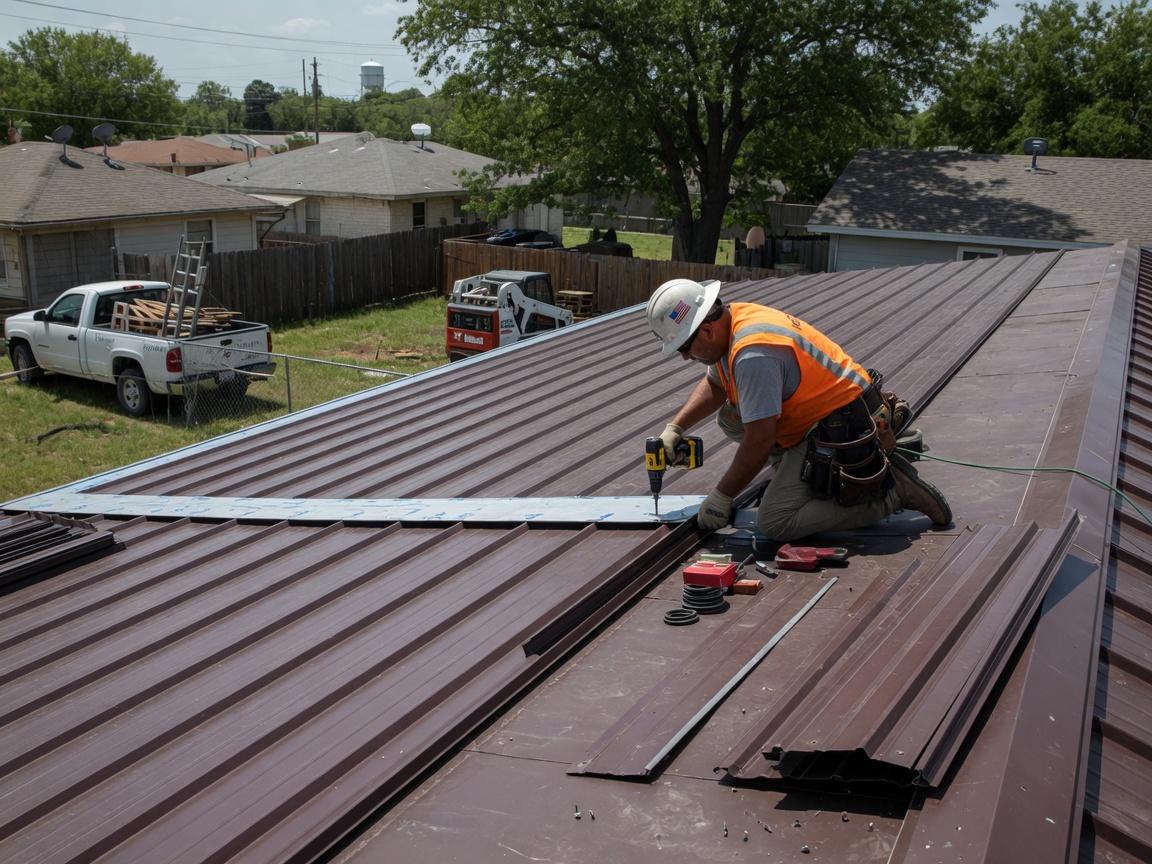
Metal roofing performs well in Johnson County where summer heat builds up under traditional shingles and sudden storms bring high winds and hail. Homeowners in Downtown Alvarado and near the Johnson County Fairgrounds often choose standing seam or screw-down panels because they shed water quickly and resist uplift during gusts. Older housing stock in the area frequently has rafters spaced for lighter materials, so installers must verify load paths and add strapping before panels go on.
Severe storms that hit between Alvarado and Cleburne can drive rain under flashings if valleys and penetrations are not detailed correctly. Metal expands and contracts more than asphalt in the temperature swings common here, so crews use floating clips and proper fastener spacing to prevent oil canning on long runs. Homes near Alvarado City Park sit on flatter lots where drainage matters, so ridge vents and eave trim are sized to keep airflow moving without pulling in wind-driven rain.
How It Works in Fort Worth
- 1
Site Assessment
Measure the roof, check rafter spacing, and note existing penetrations on homes in Alvarado and nearby Burleson.
- 2
Material Selection
Choose gauge and coating based on storm exposure and heat reflection needs for Johnson County properties.
- 3
Deck Preparation
Repair or replace damaged decking and add ice-and-water shield at eaves and valleys.
- 4
Panel Installation
Install panels with proper clips and fasteners, then seal all flashings and trim edges.
- 5
Final Walkthrough
Inspect seams, fasteners, and drainage before leaving the job site.
Metal Roofing Services We Offer in Fort Worth
✓Standing Seam Metal Roof Installation
Hidden-fastener panels installed over new underlayment for homes in Downtown Alvarado that need long-term wind and hail resistance.
✓Screw-Down Metal Panel Replacement
Direct-to-deck panels for properties near the Johnson County Fairgrounds where budget and speed matter during storm recovery.
✓Metal Roof Hail Damage Repair
Panel replacement and dent repair after severe storms that commonly affect roofs between Alvarado and Cleburne.
✓Metal Roof Ridge Vent Installation
Integrated vent systems added to improve airflow on homes dealing with summer heat buildup in Johnson County.
✓Metal Flashing and Valley Upgrades
Re-sealing and replacing flashings around chimneys and skylights on older homes in Alvarado to stop wind-driven rain intrusion.
Serving All of Fort Worth
We regularly handle metal roofing jobs near:
- 📍Fort Worth Stockyards
- 📍Kimbell Art Museum
- 📍Sundance Square
- 📍TCU Stadium
Metal Roofing Pricing in Fort Worth
Pricing varies by panel type, roof pitch, and number of penetrations. Free on-site estimates provided during business hours.
Want the full picture of this service? See our Metal Roofing page, or everything we do in Fort Worth, TX.