
2026-09-21 · Miguel Soto
Preparing Your Attic for Better Roof Ventilation in Texas
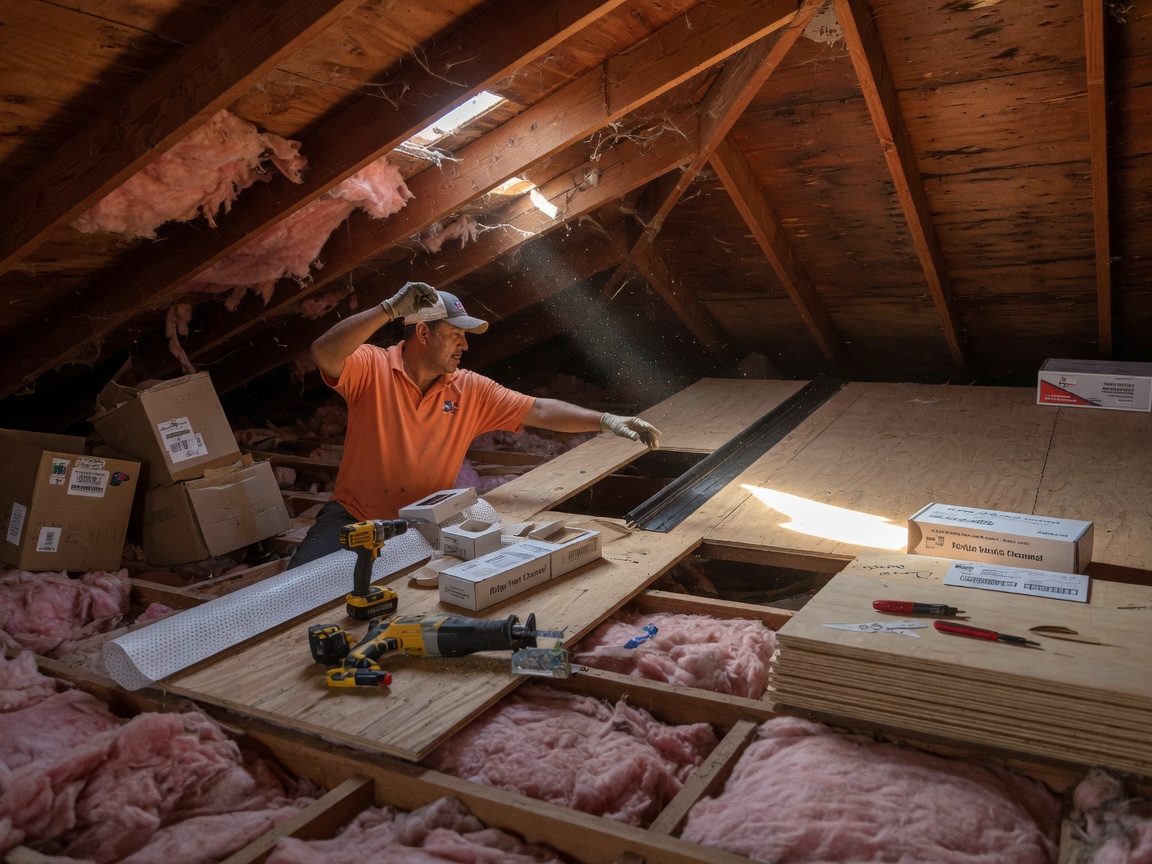
Preparing your attic for better roof ventilation in Texas starts with calculating vent area at roughly 1 square foot per 150 square feet of attic floor space, then adjusting for the hot summers and occasional severe storms common in Johnson County. This approach prevents moisture trapping and excessive heat that accelerates shingle wear on homes throughout Alvarado. Local housing stock from the mid-20th century often features limited original soffit and ridge vents, making upgrades essential before peak summer temperatures arrive.
Evaluating Existing Attic Conditions
Walk the attic floor during daylight hours to check for dark spots indicating blocked or undersized vents. In Alvarado neighborhoods near the Johnson County Fairgrounds, many homes built before 1980 have insulation that has settled and now covers soffit intakes, cutting airflow by half or more. Measure the current net free vent area against the 1:150 ratio and note any bathroom or kitchen exhaust fans venting directly into the space rather than outside. Severe storm winds can also dislodge turbine vents, so inspect those units for free rotation. Homes in Downtown Alvarado often sit on flatter lots with less natural breeze, requiring deliberate vent placement to maintain consistent air movement year-round.
Adding Intake and Exhaust Vents
Install continuous soffit vents along the eaves and pair them with a ridge vent running the full length of the roof peak. This combination creates a steady chimney effect that pulls hot air out during the long Texas summers while allowing cooler air in from below. In areas like Cleburne and Joshua, where wind-driven rain occurs, choose vent designs with built-in baffles to keep water out. Add baffles over insulation to keep the intake path clear, especially in older attics where blown-in material has migrated. One properly sized ridge vent section per 10 linear feet of roof typically handles the exhaust needs for a standard three-bedroom home in the county.
Sealing and Insulating for Ventilation Performance
Seal gaps around plumbing stacks, light fixtures, and attic access doors with foam or caulk rated for high temperatures. This step stops conditioned air from escaping into the attic and reduces the load on any new vents. In mild Johnson County winters, this same sealing keeps pipes from freezing during rare cold snaps. Use baffles and insulation dams around the new vents so the R-value remains consistent right up to the roof deck. Homeowners near Alvarado City Park often add an extra layer of radiant barrier under the roof sheathing to reflect summer heat before it reaches the living space below.
Timing Upgrades with Seasonal Roof Work
Schedule attic ventilation work alongside a roof inspection to avoid disturbing new shingles later. The link between good attic airflow and longer roof life appears clearly in Understanding Roof Replacement Costs in Johnson County. Pair the project with Seasonal Roof Maintenance Tips for Hot Texas Summers so both tasks address the same heat and storm stresses. If inspection reveals damaged decking or missing underlayment, coordinate with a roof replacement crew while the attic is open. These combined efforts keep labor costs lower than separate visits.
Verifying Results After Installation
Return to the attic on a 95-degree afternoon and confirm the temperature stays within 10–15 degrees of outside air. Feel for steady airflow at the ridge vent and check that soffit intakes remain unobstructed by insulation or debris. In Burleson homes with similar construction, this verification step often reveals one missed intake that can be corrected before summer peaks. Revisit the space after the first severe storm to ensure no new blockages from wind-blown leaves or hail debris. Consistent monitoring protects the investment and keeps roof surfaces cooler throughout the year.