
2026-10-28 · Mike Thompson
The Impact of Tree Overhang on Your Roof in Rural Texas
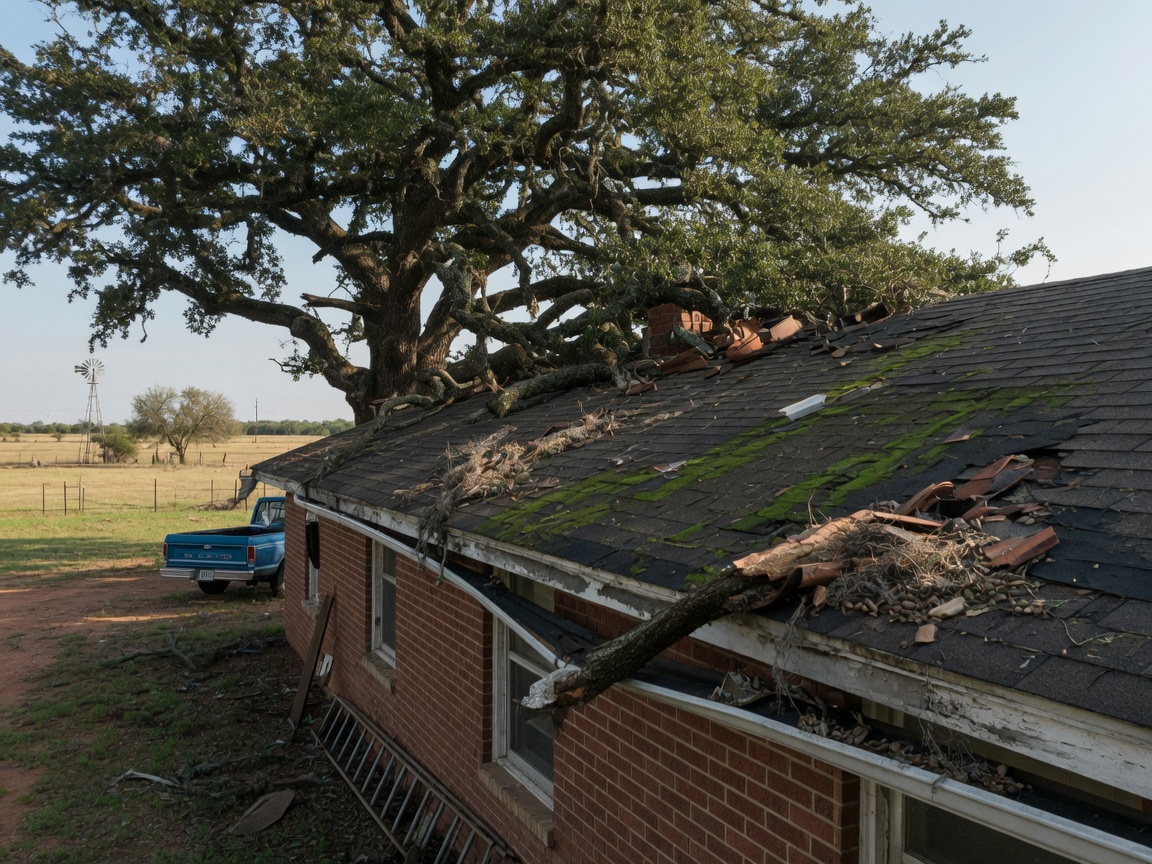
Tree overhang in rural Texas communities like Alvarado reduces shingle lifespan by 8–12 years through trapped moisture, leaf buildup, and branch abrasion, particularly when severe storms hit Johnson County.
Moisture Retention from Shade in Hot Summers
Alvarado summers push temperatures high enough that shaded roof sections under tree limbs stay damp longer after rain. This constant moisture softens asphalt shingles and promotes algae growth along the north-facing slopes common on older homes near Alvarado City Park. In Johnson County the mild winters do little to dry these areas before the next storm arrives, so rot starts at the decking level within 3–5 seasons. Homeowners who trim branches back 6–10 feet from the eaves see faster drying and fewer soft spots during annual checks.
Debris and Gutter Blockage Patterns
Leaves and small limbs from overhanging oaks and pecans collect in valleys and gutters on properties around the Johnson County Fairgrounds. When these piles stay wet they hold water against flashing and underlayment, leading to leaks at skylights and plumbing vents. Rural lots in Alvarado often have mature trees planted decades ago that now extend directly over roof planes, so debris volume increases after every wind event. Clearing gutters every 60–90 days during leaf-drop season prevents ice dams in rare winter freezes and reduces the chance of interior water stains.
Storm Damage Amplification
Occasional severe storms in Johnson County bring straight-line winds that snap weakened branches onto roofs already stressed by overhang. These impacts create punctures that allow water entry during the heavy rains that follow. Properties in outlying areas between Alvarado and nearby Burleson or Cleburne face higher risk because wind speeds stay elevated across open pasture before hitting tree lines. Storm damage roof repair crews note that homes with trimmed trees suffer fewer punctures and require smaller patch work after the same weather system.
Inspection Steps for Overhanging Trees
A thorough roof inspection starts with walking the perimeter to measure branch clearance, then moves to the attic to check for daylight around decking edges. Look for granule loss directly below limbs and dark streaks indicating constant drip points. In Alvarado, inspectors also examine metal flashing at chimneys where falling acorns can dent and crack seals. Document any limbs within 5 feet of the ridge so trimming can be scheduled before the next summer thunderstorm season.
Replacement Timing and Material Choices
When overhang has caused widespread granule loss or decking softening, roof replacement becomes the practical step rather than repeated repairs. In Johnson County, asphalt shingles rated for 130 mph wind resistance hold up better once branches are cut back. Homeowners weighing options can review understanding roof replacement costs in Johnson County to compare tear-off versus overlay approaches. Selecting impact-rated underlayment adds protection against the occasional hail that accompanies Texas storms.
Long-Term Maintenance After Trimming
After limbs are cut, schedule twice-yearly checks in spring and fall to catch new growth before it reaches the roofline again. Clearing debris from valleys and ensuring downspouts remain clear keeps water moving away from the foundation on rural lots. Properties near Joshua or Cleburne that follow this routine extend roof life by several years even with mature trees still on site. Consistent attention prevents small moisture issues from turning into full deck replacement projects.